
Early identification is the most effective tool in a horse owner’s kit. Because the hoof is a living structure, minor issues can escalate quickly if moisture and bacteria are left unchecked.
Here is a guide designed to help your customers spot the “red flags” and understand how the antiseptic properties of Ule Hoof Oil provide a proactive defence.
The Early Warning System: Identifying Common Hoof Issues
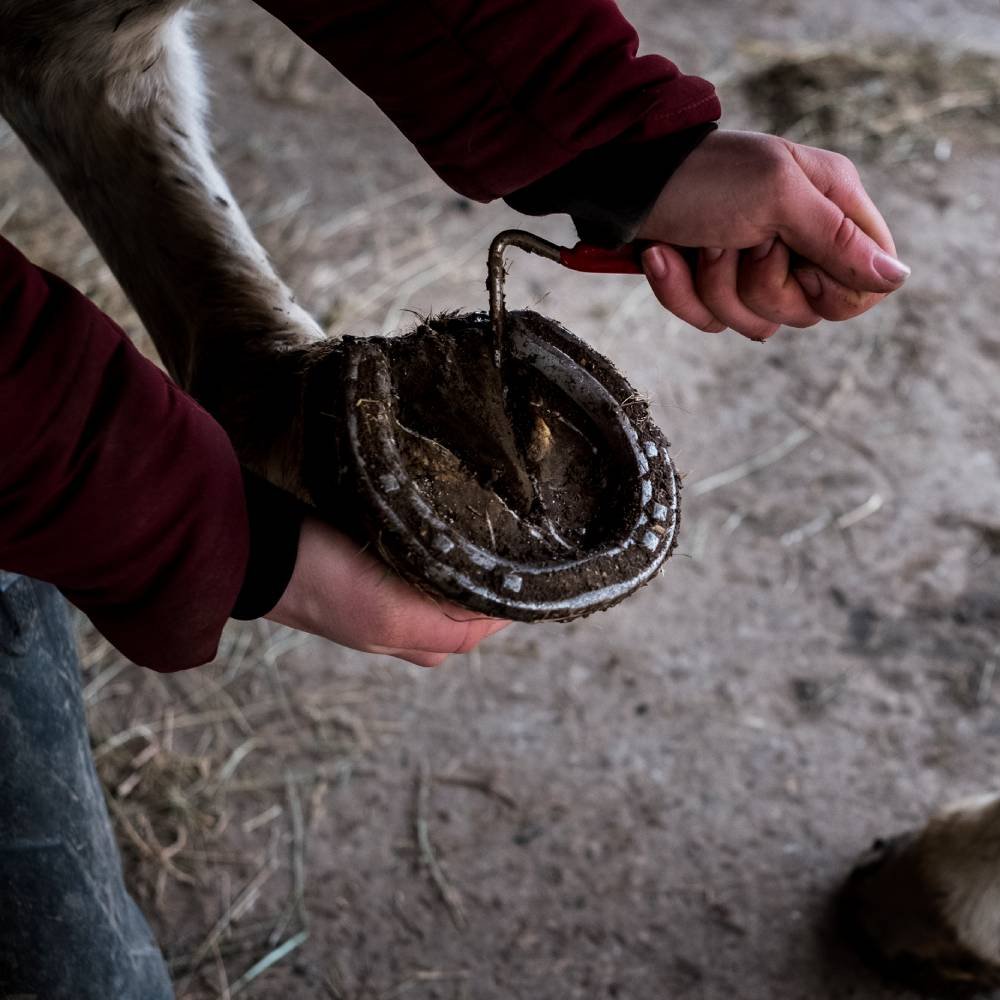
A healthy hoof should be smooth, firm, and free of strong odours. By inspecting your horse’s feet daily, you can catch these three common issues before they impact performance.
1. Thrush: The Bacterial Invader
Thrush is a common bacterial infection that targets the frog, usually flourishing in wet, muddy, or unclean stall conditions.
- What to Look For: A thick, black, discharge in the crevices (sulci) of the frog.
- The Warning Sign: A distinct, foul “rotting” odor and a frog that feels unnaturally soft or “cheesy” when picked out.
- The Ule Defense: Our formula contains natural antiseptic properties that create an inhospitable environment for fungi and bacteria. Regular application to a clean frog helps “tan” the tissue, making it tougher and more resistant to infection.
2. Seedy Toe (White Line Disease)
Seedy toe occurs when the hoof wall separates from the underlying laminae at the “white line,” allowing bacteria and fungi to eat away at the hoof tissue.
- What to Look For: A hollow space or “gap” visible on the underside of the hoof where the wall meets the sole.
- The Warning Sign: When picking the hoof, you may notice crumbly, chalk-like debris falling out of a small hole or crack near the toe.
- The Ule Defense: By maintaining the correct moisture balance, Ule Hoof Oil prevents the hoof wall from becoming too brittle or too soft—the two primary states that lead to separation. The oil’s antiseptic qualities help protect these vulnerable gaps from further environmental contamination.
3. Sand Cracks: The Structural Break
Sand cracks are vertical cracks in the hoof wall. they can be “superficial” (top layer only) or “deep” (affecting the sensitive tissue).
- What to Look For: Vertical lines running up from the ground surface or down from the coronet band.
- The Warning Sign: A crack that appears to widen when the horse puts weight on the hoof, or heat around the coronet band.
- The Ule Defense: Cracks are often caused by extreme dryness. Ule Hoof Oil uses fish oils and vegetable extracts to deeply moisturize the keratin fibers. This keeps the hoof wall elastic, allowing it to flex under pressure rather than snapping or splitting.
How Antiseptic Properties Support Healing
While many oils simply “dress” the hoof for shine, a high-quality oil like Ule provides a functional barrier.
- Eliminates Microbes: Natural antiseptics help neutralize surface bacteria before they can penetrate deeper structures.
- Promotes Clean Growth: By keeping the hoof hygienic, you ensure that new horn growing down from the coronet band is healthy and strong.
- Breathable Protection: Unlike heavy greases that can trap bacteria inside a hoof, Ule’s oil-based blend allows the hoof to breathe while still repelling external moisture.
Note: While Ule Hoof Oil is an excellent preventative and supportive care tool, always consult your farrier or veterinarian for severe lameness or deep, bleeding cracks.
Pro-Tip for “Problem” Hooves
If you are dealing with active thrush or seedy toe, ensure the hoof is scrubbed clean and dried thoroughly before applying Ule Hoof Oil. This ensures the antiseptic properties make direct contact with the affected area.